
Key takeaways
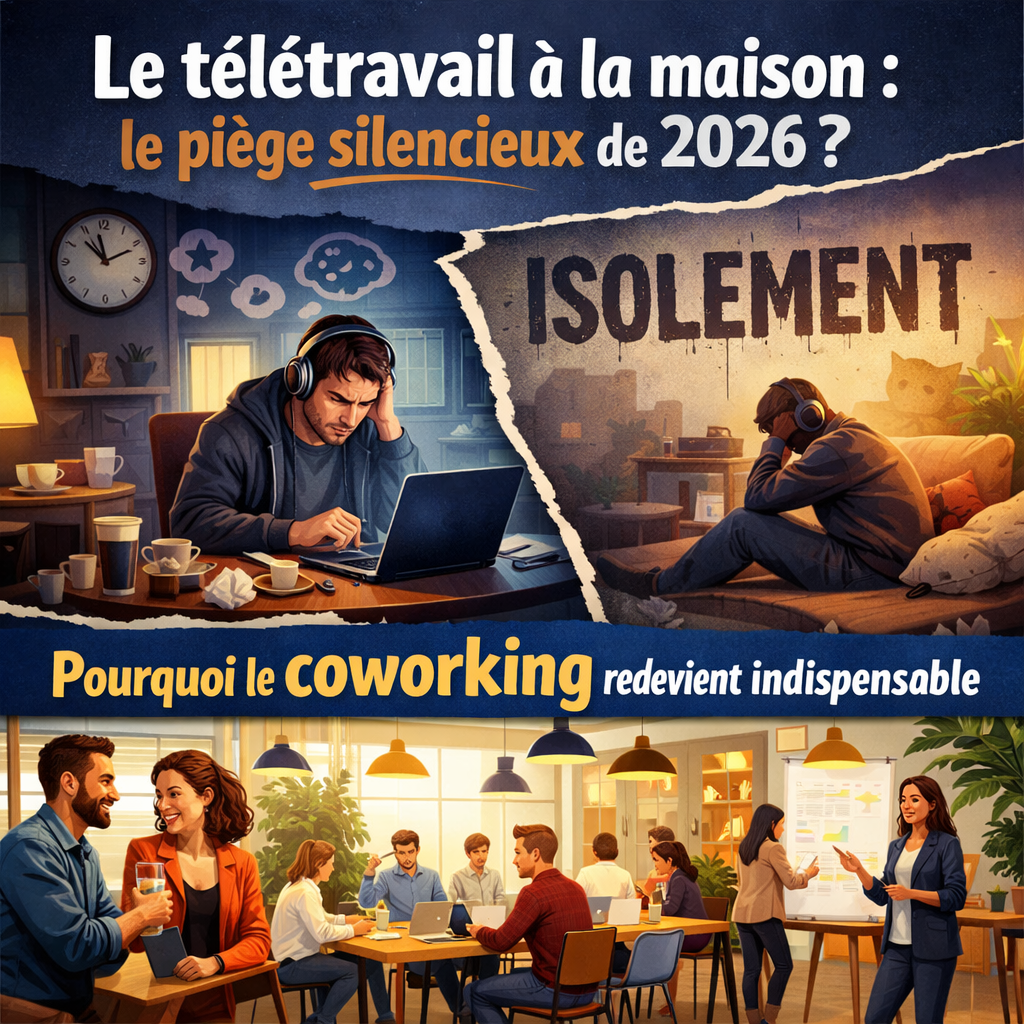
- The living room walls closing in.
- Creativity running out of steam.
- The boundary between work and personal life completely erased.
- An isolation that weighs much more than people like to admit.
Introduction: A Dream That Is Crumbling
We were sold the dream: no more commuting, pajamas all day, total freedom. In January 2026, the reality is far less Instagram-worthy.
In 2020-2022, remote work felt almost magical… for about two weeks. Today, the picture is very different:
Full-time home remote work is no longer just a productivity question; it has become a major mental health issue.
- The living room walls closing in.
- Creativity running out of steam.
- The boundary between work and personal life completely erased.
- An isolation that weighs much more than people like to admit.
The Numbers That Make You Think (France & World 2025-2026)
Many recent studies confirm it: prolonged remote work has a hidden cost.
Bottom line: we have gained flexibility, but often lost human balance.
- 35 to 41% of remote workers report feeling socially isolated (Mercer, Bitrix24 2025).
- About 30% of French employees have already experienced moderate to severe burnout in their career (Empreinte Humaine / OpinionWay Barometer).
- Intensive remote workers report psychological distress more often than on-site workers (46% vs 40% in some post-Covid studies).
- Burnout, chronic stress, hyperconnection: this explosive cocktail is very present in 2025-2026.
Coworking in 2026 Is No Longer a Luxury, It’s Mental Hygiene
Coworking has evolved tremendously since 2020. It’s no longer just renting a chair — it has become a smart response to the drift of full remote work.
Here is what you actually buy when you choose a good coworking space in 2026.
A Clear Mental Boundary
The commute (even 10–15 min) becomes a decompression airlock. You mentally switch from home/pajamas/morning-coffee mode to focus + pro mode.
Many coworkers say it’s the key to their productivity comeback.
The Magic Power of Body Doubling
Nothing is more motivating than seeing someone else in deep work two meters away. It’s a positive contagion — you start working almost in spite of yourself.
Work-psychology studies confirm it: the mere presence of other focused people boosts motivation and reduces procrastination.
A Stimulating Third Place
In 2025-2026, the best spaces bet on well-being: natural light, plants, quiet zones, collaborative zones, sometimes even wellness slots (quick yoga, guided meditation).
It’s good for creativity AND mental health.
The Win-Win Hybrid Model of 2026
The big current trend? Neither 100% home, nor 100% traditional office.
The real future of work (according to Xerfi, Deskeo, CoworkIntel 2024-2025 studies):
Companies have understood this — many even offer coworking subscriptions to their remote employees.
The result: less isolation, more motivation, and a real separation between life spheres.
- 2-3 days at home for deep focus.
- 1-2 days in coworking for collective energy, informal exchanges and a change of scenery.
- Sometimes 1 day at headquarters for important meetings.
Conclusion & Call to Action
The living room couch is great… for Netflix or writing a blog post on Sunday morning.
But to build a fulfilling career, stay creative long-term and protect your mental health in 2026? The shared energy of coworking is no longer an option — it is almost a physiological need.
What about you? Are you team ‘Couch forever’, or do you already feel the need for a small dose of collective energy? Tell me in the comments: how many days a week do you actually work from home? And above all: is it starting to weigh on you?
AH
Author
AI HUB Editorial
Research Desk