Claude in 2026: A Family of Models for Various Uses
Claude is based on a product range logic. Each model meets a different need.
Haiku: Speed and Efficiency
Haiku is designed for fast tasks, high volumes, and use cases where latency matters: customer support, information extraction, classification, simple responses, or light automation.
Sonnet: The Versatile Model
Sonnet is the balanced model. It is suitable for businesses wanting a good level of reasoning, writing, analysis, and coding without systematically opting for the most expensive model. Anthropic presents Sonnet 4.6 as a significant upgrade for coding, long-context reasoning, agents, design, and knowledge tasks.
Opus: Maximum Performance
Opus targets the most complex tasks: software architecture, strategic analysis, multi-step reasoning, audits, large documents, and enterprise workflows. Claude Opus 4.7 is announced by Anthropic as its newest model, with notable progress in advanced software engineering.
The Big Change: Claude Becomes Agentic
The major difference is not just the quality of responses. The real change is that Claude can act in a work environment.
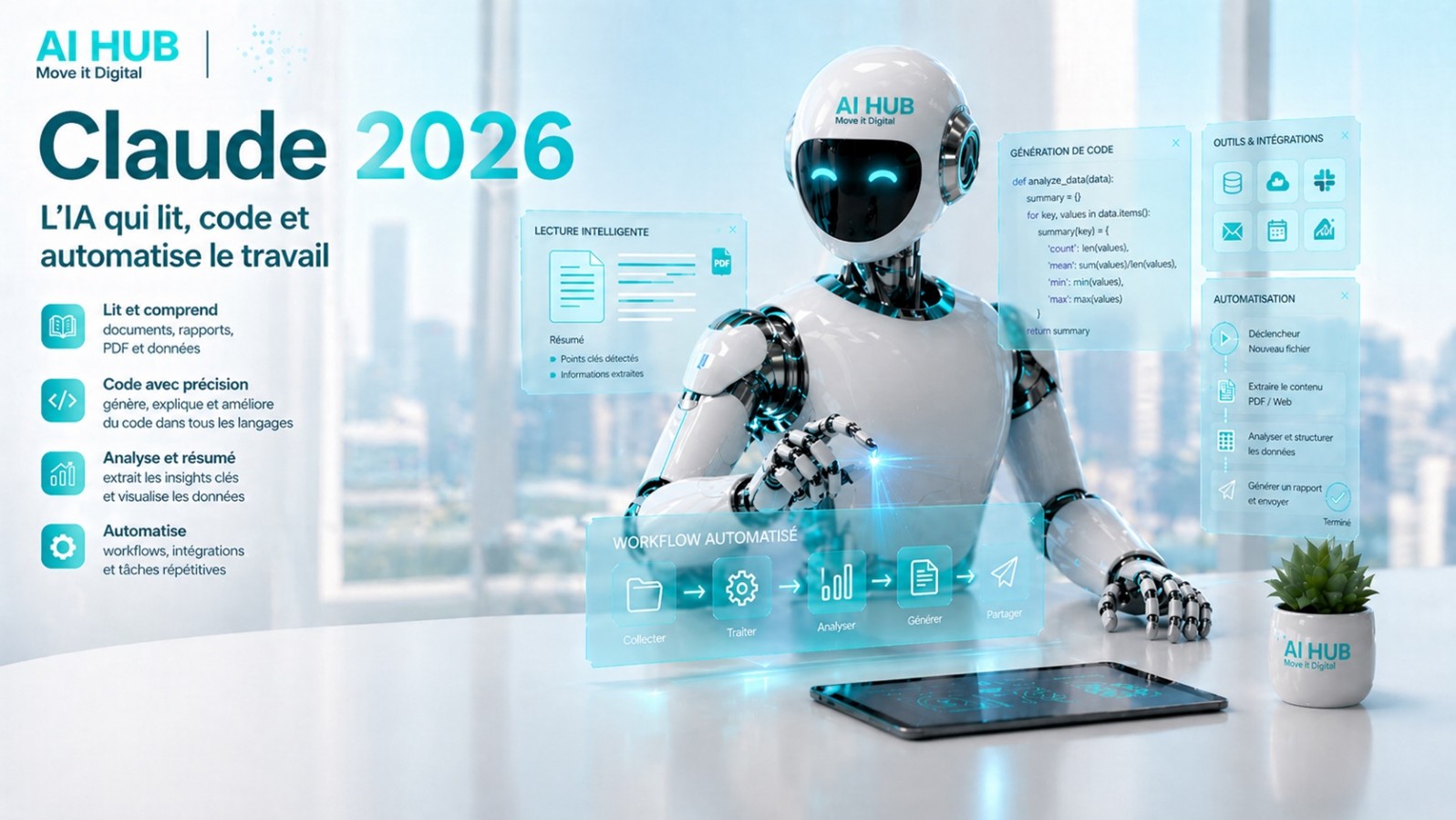
It can read documents, understand a goal, select tools, execute steps, verify a result, and propose a next action. In an enterprise, this transforms Claude into an operational assistant capable of supporting entire processes.
Claude Code: From Copilot to Development Partner
Claude Code goes beyond simple snippet generation. It can help understand a codebase, explain an architecture, spot errors, propose refactorings, generate tests, and assist with a technical migration.
For a startup, an AI Hub, or a product team, this can significantly reduce the time between idea and prototype. A founder can move faster from concept to MVP, while a technical team can accelerate bug fixing, documentation, and code reviews.
Computer Use: When AI Also Controls the Interface
One of the most important capabilities is computer use: Claude can interact with a graphical interface, click, fill fields, navigate an application, and use software that might not have a modern API. Anthropic introduced this capability as a step towards agents capable of acting in real digital environments.
This is particularly useful for companies that still use internal software, back offices, or business tools that are difficult to automate.
Concrete Use Cases for Businesses
Claude can be deployed in several business functions with a measurable impact.
Document Analysis
Claude can read contracts, reports, studies, calls for tenders, or administrative documents, and then produce a clear summary.
Software Development
It can help write code, test, document, and maintain applications.
Customer Support
It can summarize conversations, suggest replies, and improve service quality.
Back Office Automation
It can prepare reports, extract data, fill forms, and guide repetitive processes.
AH
Author
AI HUB Editorial
Research Desk