AI4Morocco cultureDarija artificial intelligenceAI linguistic diversityArabic language AIAmazigh NLP MoroccoMoroccan digital cultural heritagedigital TifinaghAutomatic language processing Morocco
Introduction
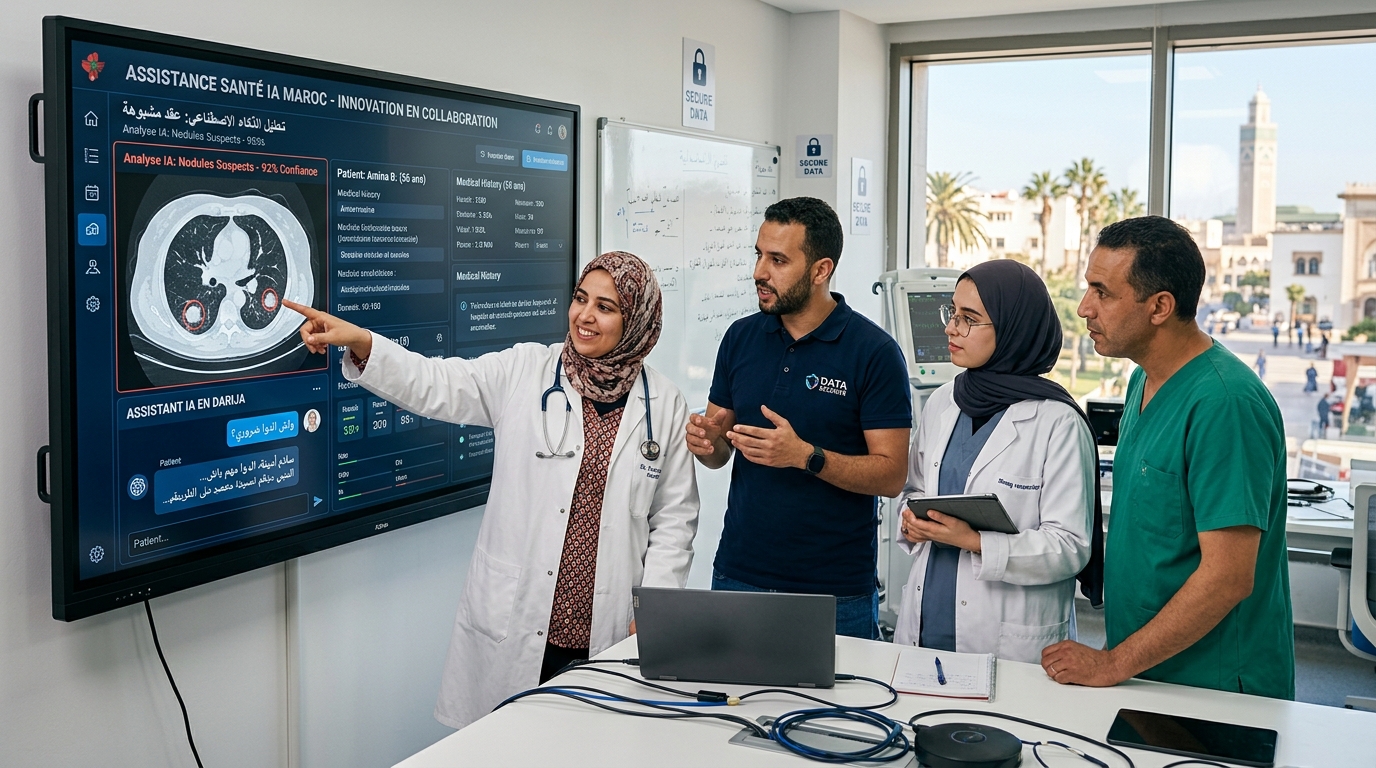
There is a blind spot in the global AI revolution: most large language models—these systems that understand and generate text with increasing sophistication—have been trained extensively on English, with some forays into French, Spanish, Mandarin, or Classical Arabic. Moroccan Darija, spoken daily by more than 30 million people, is almost entirely absent from these models. Amazigh and its variants—Tachelhit, Tamazight, Tarifit—even more so.
It is the injustice that the IA4Society & Culture group of AI4Morocco has committed itself to correcting. Not through abstract cultural activism, but because AI systems that do not understand how Moroccans actually speak are systems that cannot truly serve Moroccans.
Why Darija is a Fascinating Technical Challenge
Darija is not simply "spoken Arabic." It is a fully-fledged language, with its own grammar, its own phonology, and a lexicon that creatively blends Arabic, Berber, French, Spanish, and even Portuguese roots—a heritage of Morocco's centuries of cosmopolitan history. This richness makes it a captivating field of linguistic study, but also a formidable technical challenge for automatic language processing systems.
Darija is rarely written—and when it is, speakers sometimes use the Arabic alphabet, sometimes Latin characters, and sometimes a mix of both, with spelling conventions that vary from one person to another. The same word can be written in five different ways depending on the writer. This lack of written standardization is a major obstacle to the creation of training datasets.
The IA4Society & Culture group is working on several fronts: the collection and annotation of written and spoken darija corpora, the definition of reference orthographic conventions (without imposing artificial normalization that would betray the living nature of the language), and the development of automatic processing models adapted to these specificities.
The Amazigh: a cultural and digital urgency
If Darija is underrepresented in global AI, Amazigh is even more so. However, Tamazight has been co-official in Morocco since the 2011 Constitution, and millions of Moroccans—particularly in the Souss, Rif, and Atlas regions—have Amazigh as their mother tongue.
Building AI systems capable of understanding and generating Amazigh — in its regional variants and in Tifinagh, its own script — is both an act of linguistic justice and a pioneering technological project. There are few models of this kind in the world, which means that the team working on it in Morocco can be a trailblazer at the international level.
The group collaborates with the Royal Institute of Amazigh Culture (IRCAM) to access existing linguistic resources and develop annotated corpora. This is a symbolically strong partnership that anchors technological work within legitimate Moroccan cultural institutions.
The digitization of cultural heritage
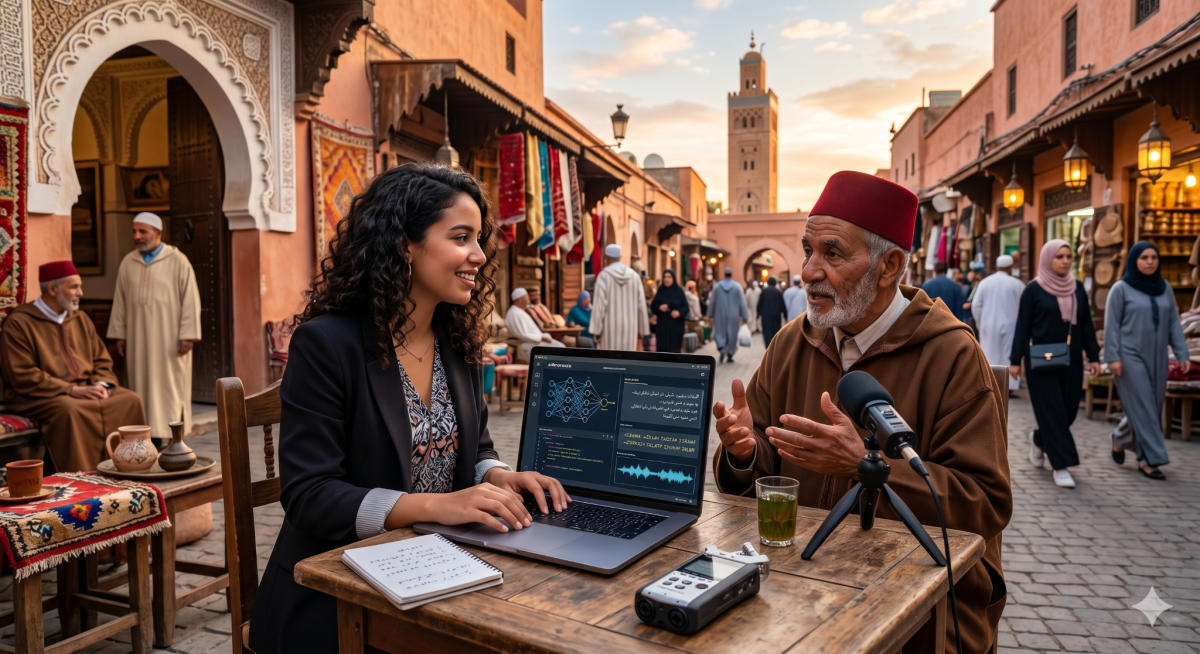
Beyond living languages, the IA4Society & Culture group is interested in the preservation of Morocco's intangible cultural heritage. Thousands of hours of recordings of Andalusian music, Malhoun poetry, traditional tales, Gnawa chants, or Amazigh music are stored on media that deteriorate or are scattered in archives that are not easily accessible.
AI can play a crucial role in the digitization, transcription, classification, and access provision of this heritage. Speech recognition models trained on Moroccan dialects and musical styles can automate part of the transcription work. Cultural recommendation systems can help disseminate these treasures to younger Moroccan generations and the global diaspora.
The group is working on concrete digitization projects in partnership with the National Library of the Kingdom of Morocco and several regional cultural associations.
Join the IA4Society & Culture group
This group is particularly open to linguists, anthropologists, ethnomusicologists, historians, archivists, NLP developers, and anyone passionate about Moroccan languages and culture. It also welcomes members of the diaspora who wish to contribute remotely to the preservation and digital enhancement of Moroccan heritage.
Joining AI4Morocco on this project means taking part in something unique: cutting-edge technology serving a millenary heritage.
AH
Author
AI HUB Editorial
Research Desk
Social inclusion through AI